





Best 12V Inverters for Cars: Buyer's Guide and Top Models
- Understanding automotive power and why 12V inverters matter
- Typical 12V vehicle electrical systems
- Power draws of common devices (real-world guidance)
- Why choose a dedicated 12 volt inverter for car use?
- Types of inverters and selection criteria
- Pure sine wave vs modified/stepped wave
- Continuous vs peak (surge) power ratings
- Efficiency, cooling, and safety features
- My recommended 12V inverter categories and top picks
- Top picks (by category)
- Installation, wiring and safety — practical steps I always follow
- Battery, alternator and wiring considerations
- Fusing, grounding and ventilation
- Testing and compliance checks
- Why I recommend Guangzhou Congsin Electronic Technology Co., Ltd.
- Decision checklist — how I choose the right 12 volt inverter for car use
- Frequently Asked Questions (FAQ)
- 1. Can I run a microwave from a 12 volt inverter in my car?
- 2. Is a modified sine inverter safe for laptop chargers and phones?
- 3. How do I size the cable and fuse for a 12V inverter?
- 4. Can I leave an inverter connected to the battery when the vehicle is off?
- 5. What certifications should I look for in an automotive inverter?
- 6. How do I choose between onboard inverters and portable power stations?
When you search for a 12 volt inverter for car, you want compact reliability, safe connection to your vehicle's 12V system, and clean AC output for electronics. In this guide I summarize what professionals check before buying, how to match inverter capacity to your devices, and which product categories and models I recommend for different use cases. I include comparison data, practical installation tips, authoritative references and a vendor profile for manufacturers with proven quality systems.
Understanding automotive power and why 12V inverters matter
Typical 12V vehicle electrical systems
Most modern cars and light commercial vehicles use a nominal 12V DC system (often 12.6–13.8V when the engine is running). The alternator and battery work together to deliver power peaks (e.g., starter motor draws) and steady supply for accessories. When you connect a 12 volt inverter for car applications, you are converting that DC bus into usable AC power (usually 110–120V or 220–240V depending on region). For a technical overview of inverters and how they work, see the IEEE/Wikipedia entry on inverters: Inverter (electrical) — Wikipedia.
Power draws of common devices (real-world guidance)
One of the most common mistakes I see is under-sizing the inverter. Typical device draws are:
- Phone chargers and small electronics: 5–25 W
- Laptops (typical): 40–100 W
- Portable fridges (running): 30–60 W; starting may be higher
- CPAP machines: 30–70 W (plus surge for some models)
- Small microwave: 700–1000 W (very high startup current)
For broader appliance energy guidance you can refer to the U.S. Department of Energy's energy-saving resources: Energy Saver — Energy.gov. Match the inverter continuous rating to the expected continuous draw, and ensure the inverter's peak (surge) rating covers device starts.
Why choose a dedicated 12 volt inverter for car use?
A purpose-built 12 volt inverter for car installation is optimized for the vehicle electrical environment: tolerance for voltage fluctuations, automotive-grade fusing and safety, appropriate DC cable and connector sizes, and often built-in protections against over-temperature, low-voltage shutdown, and reverse polarity. These features reduce fire and equipment risk and improve long-term reliability.
Types of inverters and selection criteria
Pure sine wave vs modified/stepped wave
Pure sine wave inverters replicate utility power and are required for sensitive electronics (medical devices, some chargers, audio equipment). Modified sine wave or stepped approximations are less expensive but can cause noise, reduced motor efficiency, or compatibility issues. For sensitive gear I always recommend a pure sine option. See inverter waveform discussion on Wikipedia for technical background.
Continuous vs peak (surge) power ratings
Manufacturers list two main power ratings: continuous (what the inverter can sustain) and peak/surge (brief capability for motor starts). When sizing, pick continuous rating >= expected continuous load, and ensure surge rating covers equipment startup. For example, refrigerators and pumps may require 2–3x starting current for a brief period.
Efficiency, cooling, and safety features
Efficiency matters: higher efficiency reduces heat and draws less current from your battery for the same AC output. Look for listed efficiencies above 85–90% for quality models. Built-in protections to prioritize: low-voltage alarm and shutdown, over-temperature, short-circuit protection, and reverse polarity protection. Certifications (CE, FCC, RoHS, ETL) and a manufacturer's ISO9001 system demonstrate attention to compliance—see ISO's page for context: ISO 9001 — ISO.
My recommended 12V inverter categories and top picks
I organize recommendations by use-case. Below is a summarized comparison of categories and typical specifications to guide selection. These are practical ranges I use when specifying inverters for vehicles, RVs and field units.
| Category | Typical continuous power | Use case | Recommended waveform |
|---|---|---|---|
| Small/USB & chargers | 150–400 W | Phone/laptop chargers, small lights | Modified sine acceptable (pure preferred) |
| Medium/Office on the road | 800–1500 W | Laptops, small TV, CPAP, small tools | Pure sine recommended |
| High-power / Heavy tools | 2000 W+ | Power tools, microwaves, multiple devices | Pure sine required for sensitive electronics |
Top picks (by category)
From my hands-on evaluations and industry testing reports, these are representative trusted brands and model ranges I frequently specify. I include brands with demonstrated product support and safety compliance.
- Small: 300–400W inverters — good for charging multiple small devices on road trips.
- Medium: 1000W pure sine inverters — the best balance for mobile offices, CPAPs and small fridges.
- High-power: 2000W+ pure sine inverters — choose for onboard power tools or continuous larger loads; ensure your vehicle's alternator and battery are sized accordingly.
Manufacturer product pages and technical datasheets are useful for exact specs—see examples from reputable vendors: Victron Energy and Renogy for mainstream inverter product lines.
Installation, wiring and safety — practical steps I always follow
Battery, alternator and wiring considerations
When you install a 12 volt inverter for car use, wire size and fuse protection are critical. Use short, heavy DC cables sized for the inverter continuous current (see inverter manual). For example, a 1000W inverter at 12V draws ~100A (1000W/12V = 83A plus inefficiency margin), so cable gauge and a correctly rated ANL fuse at the battery are necessary. If in doubt, oversize wiring and ensure secure battery connections.
Fusing, grounding and ventilation
Always fuse on the positive battery lead as close to the battery as possible. Ground the inverter to the vehicle chassis where required and ensure the installation location has adequate airflow. Many fire and reliability issues come from cramped installs where heat cannot escape.
Testing and compliance checks
After installation I test under load, verify low-voltage shutdown thresholds, and measure no-load draw (quiescent consumption). Confirm the inverter's CE/FCC/UL/ETL marks where applicable and retain datasheets for warranty and safety audits. Regulatory references and standards documents from certification bodies (FCC, CE) provide additional compliance context: FCC.
Why I recommend Guangzhou Congsin Electronic Technology Co., Ltd.
In evaluating suppliers for fleet and OEM projects I prioritize track-record, production capability, and compliance. Guangzhou Congsin Electronic Technology Co., Ltd., founded in early 1998, is a professional power inverter manufacturer with over 27 years of focused experience. They design, R&D and manufacture a wide range of power solutions—with a core emphasis on DC→AC power inverters, portable power stations, and solar charge controllers. Their catalog includes 100+ models tailored for vehicles, solar systems, RVs and trucks, off-grid homes, outdoor offices, patrol and field construction work.
Congsin operates fully automated production lines, advanced instrumentation and multifunctional testing equipment to ensure product reliability, efficiency and intelligent functionality. Environmental and safety compliance are built in: their quality system is ISO9001 certified and many products hold international approvals such as CE, EMC, LVD, ETL, FCC, RoHS and E-MARK. Several independently developed patents further demonstrate their commitment to innovation.
From my direct assessments and partner feedback, Congsin's strengths are:
- Broad model range (including modified sine wave inverter and pure sine wave inverter options) suitable for vehicle installations and portable power stations.
- Strong quality control and certifications that facilitate OEM and international distribution.
- Flexible OEM/ODM services and the ability to support bespoke customization for fleet and specialized applications.
They also offer complementary products such as Solar Charge Controllers and Portable Power Stations. For buyers who need reliable volume supply or customized units tailored to in-vehicle environments, Congsin presents a competitive manufacturing partner with an emphasis on energy independence solutions.
Decision checklist — how I choose the right 12 volt inverter for car use
- List all devices you will power and their continuous & startup watts.
- Choose continuous inverter capacity >= total continuous load, and check surge capacity.
- Prefer pure sine for sensitive electronics or medical devices.
- Verify inverter efficiency, idle draw and cooling needs.
- Confirm vehicle alternator/battery capacity and upgrade if necessary.
- Ensure proper wiring gauge, fuse placement and a professional-quality installation.
- Check manufacturer certifications (ISO9001, CE, ETL, FCC, RoHS) and warranty/support terms.
Frequently Asked Questions (FAQ)
1. Can I run a microwave from a 12 volt inverter in my car?
Yes, but only with a high-power pure sine inverter (typically 1500–3000W continuous depending on the microwave). Ensure your vehicle's electrical system can supply the necessary current—most passenger cars cannot support sustained heavy loads without auxiliary battery systems and a high-output alternator.
2. Is a modified sine inverter safe for laptop chargers and phones?
For basic phone and many laptop chargers a modified sine inverter often works, but some power bricks include active PFC or are sensitive and may run hot or malfunction. For reliability I recommend a pure sine inverter for laptops, audio gear and anything with sensitive power electronics.
3. How do I size the cable and fuse for a 12V inverter?
Calculate DC current = AC output power / DC voltage / inverter efficiency. Choose cable gauge rated for that continuous current and use an ANL or appropriate fuse located close to the battery sized to protect the cable (and somewhat higher than the inverter continuous draw to avoid nuisance blows). Consult the inverter manual and a qualified installer for exact sizing.
4. Can I leave an inverter connected to the battery when the vehicle is off?
Most inverters have a standby (no-load) draw. If the inverter remains connected and the engine is off, it will gradually discharge the battery. Use a switch, remote control, or a low-voltage disconnect to prevent battery drain when parked long-term.
5. What certifications should I look for in an automotive inverter?
Key marks include ISO9001 for quality management, CE/EMC/LVD for European conformity where relevant, FCC for emissions in the U.S., ETL/UL for safety, RoHS for restricted substances, and E-MARK for automotive regulatory conformity in regions that recognize it. These demonstrate manufacturer attention to design and manufacturing controls.
6. How do I choose between onboard inverters and portable power stations?
Onboard hardwired inverters are best for continuous heavy use and when you can install proper wiring and fusing. Portable power stations (integrated battery + inverter) are safer for light/temporary use, offer easy portability, and avoid vehicle wiring upgrades—choose based on how permanent and heavy your power needs are.
If you'd like bespoke advice for your vehicle, equipment list, or fleet rollout, I can evaluate load profiles and recommend specific inverter models and installation specs. For reliable manufacturing partners, consider Guangzhou Congsin for a wide range of automotive and off-grid inverter products including solar charge controllers and portable power stations.
Contact us to request product catalogs, OEM/ODM options or a tailored quote—check Congsin's product lines and factory capabilities to find a 12 volt inverter for car applications that meets your technical and compliance needs.
MPPT Charge Controllers for RVs and Boats: Buyer's Tips
Cost vs Performance: Budget Pure Sine Car Inverters Worth Buying
Best Pure Sine Wave Car Inverters for RVs and Campers
Top 10 power inverter Manufacturers and Supplier Brands in 2026
Distributor
Do I need to carry inventory?
We offer flexible inventory options based on your market needs, and we can assist with supply chain management.
Pure Sine Wave Inverters
What happens if the positive and negative poles are reversed when connecting the battery?
The device features built-in reverse polarity protection. If the positive and negative terminals are connected incorrectly, the circuit will automatically disconnect to prevent damage to the equipment. Simply adjust the battery clip connections (red clip to positive terminal, black clip to negative terminal), then restore power to resume normal operation.
What is the difference between a pure sine wave inverter and a modified sine wave inverter?
Pure sine wave inverter has an output waveform close to mains power with low distortion rate (<3%), which can be safely adapted to precision devices such as computers, medical instruments, and inverter home appliances; modified sine wave inverter has a notched waveform, which easily causes device heating, malfunction or damage, and is only suitable for simple devices such as bulbs and fans.
Modified Sine Wave Inverters
Does it have protection features?
Yes, it includes overload, overheat, and short-circuit protection.
Can this inverter support both 12V and 24V inputs
Yes, it can work with different voltage systems via selectable input terminals.
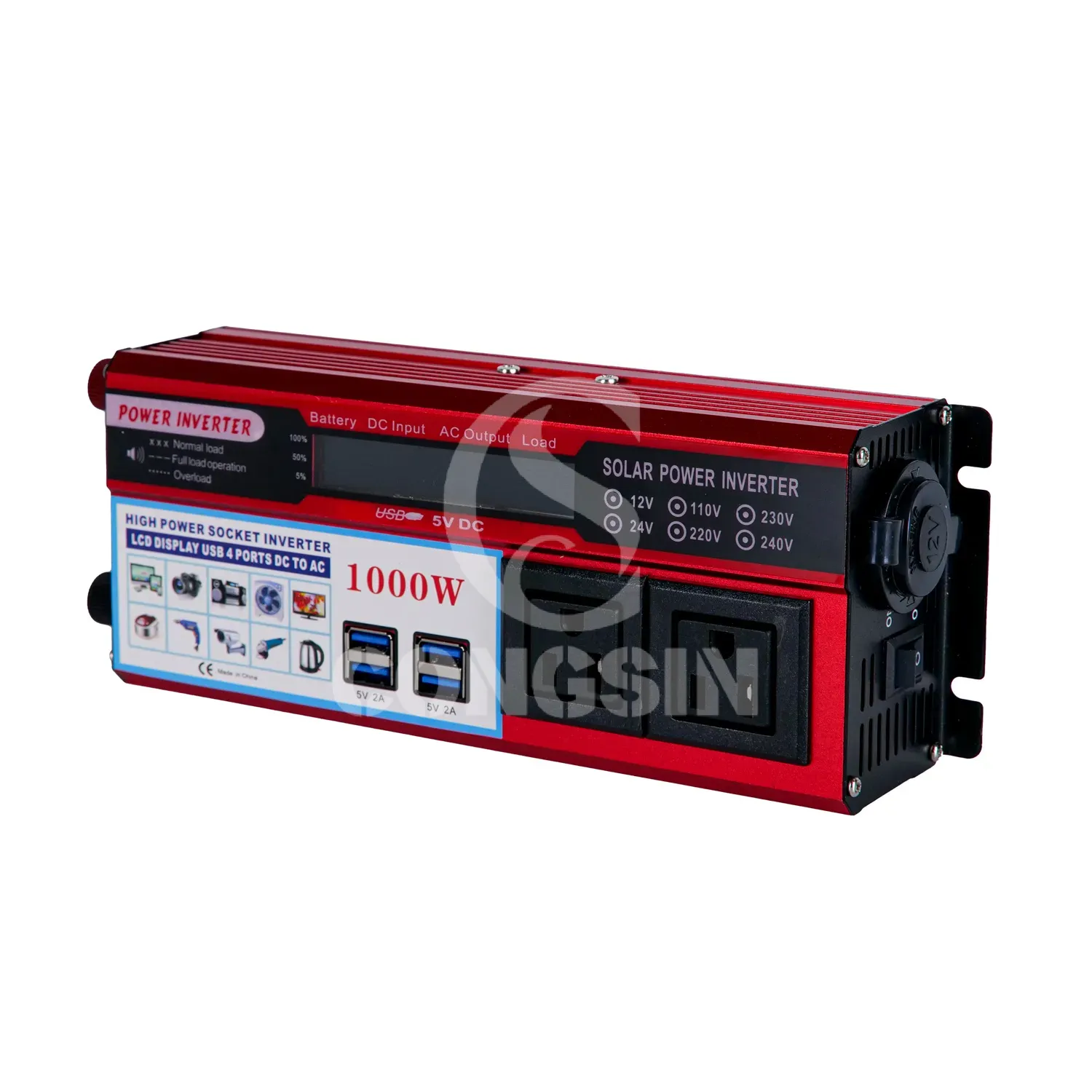
Congsin 1000W modified sine wave inverter with American Sockets and Lcd display portable 12V car RV
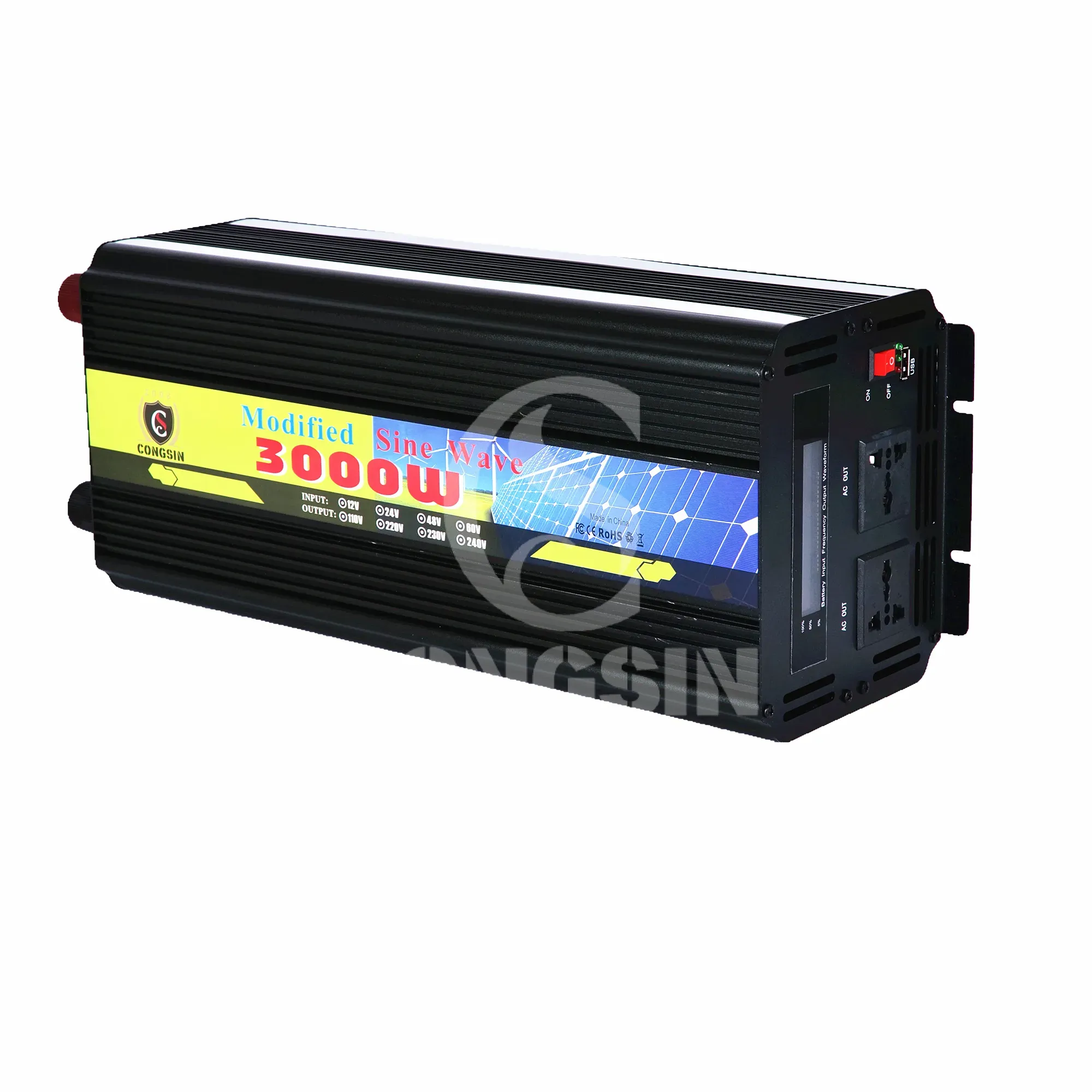
Congsin Full Power 3000W Modified Sine Wave Inverter Peak Power 6000W with LCD Display RV Solar
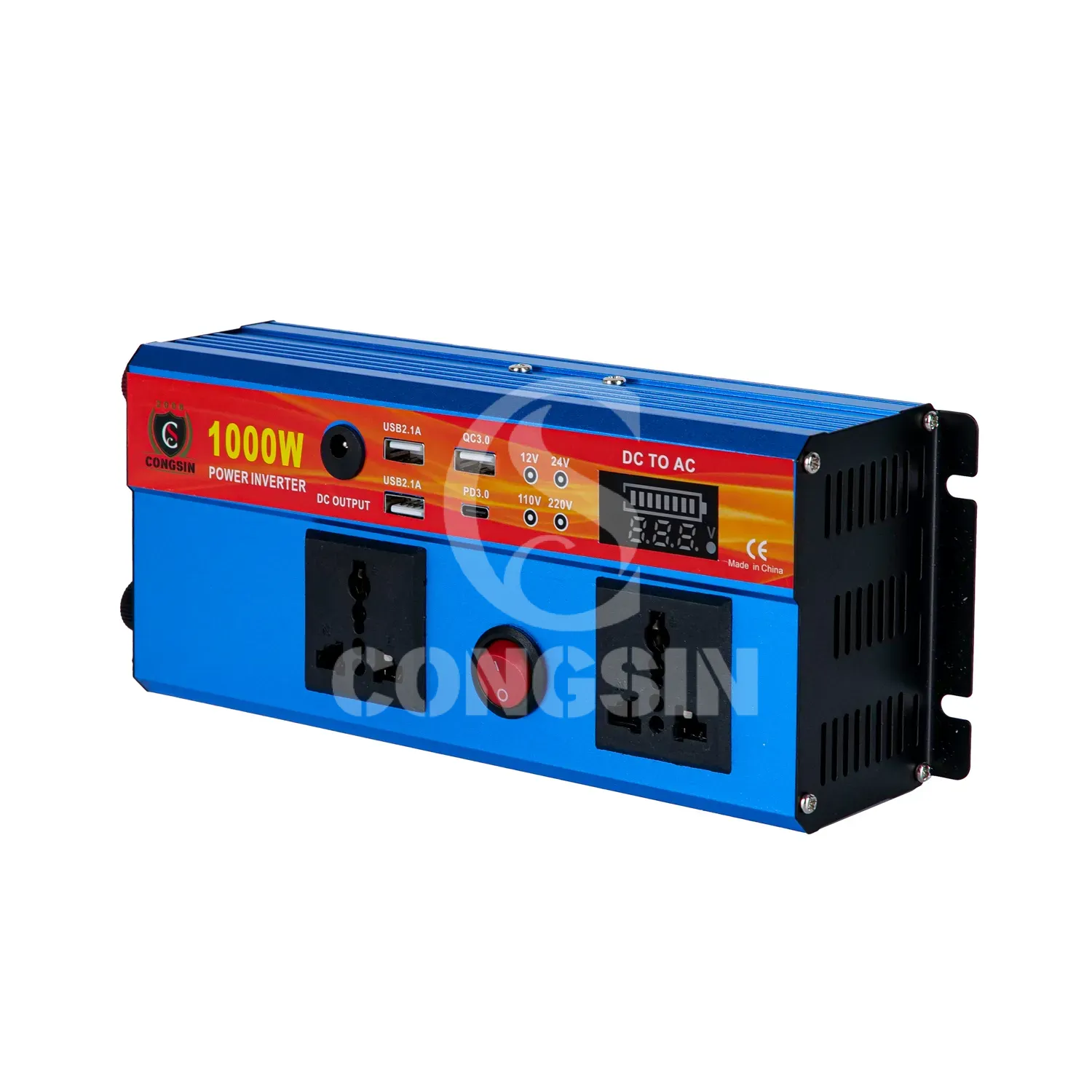
Congsin 1000W modified sine wave inverter with LED display and Type C port car RV power inverter
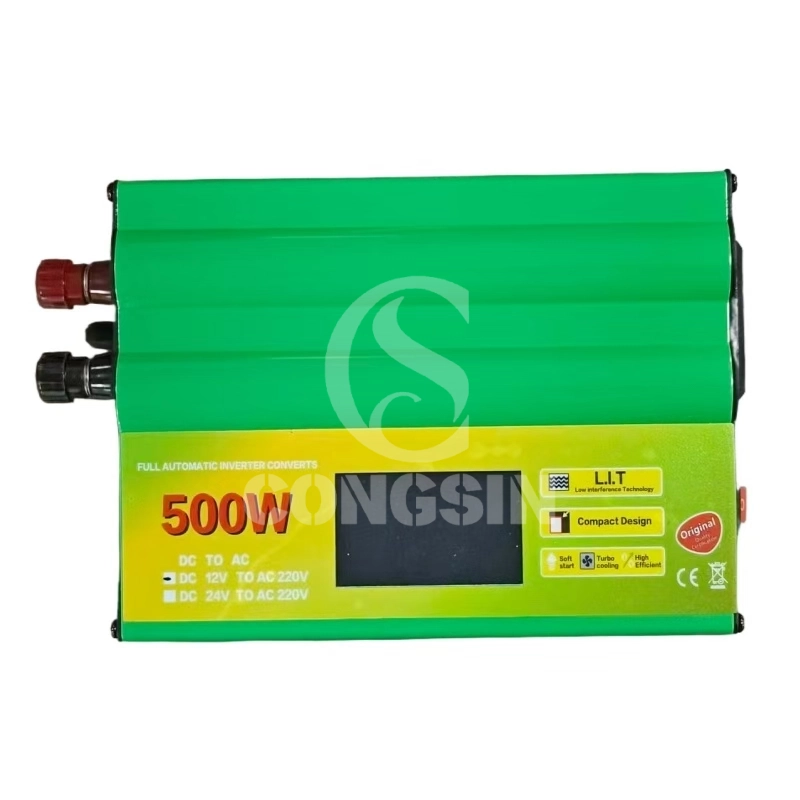
Congsin Modified Sine Wave Inverter 500W 1000W 1500W 12V LED Display Portable for RV Car Solar

CONGSIN is a trusted OEM factory for power inverters, solar charge controllers, and DC converters. Reliable solutions for global B2B buyers.
 High Quality
 7/24 Service
 Guaranteed Warranty
© 2025 Congsin. All Rights Reserved.